Which PC Parts Are Safe to Buy Used — and Which Aren’t?
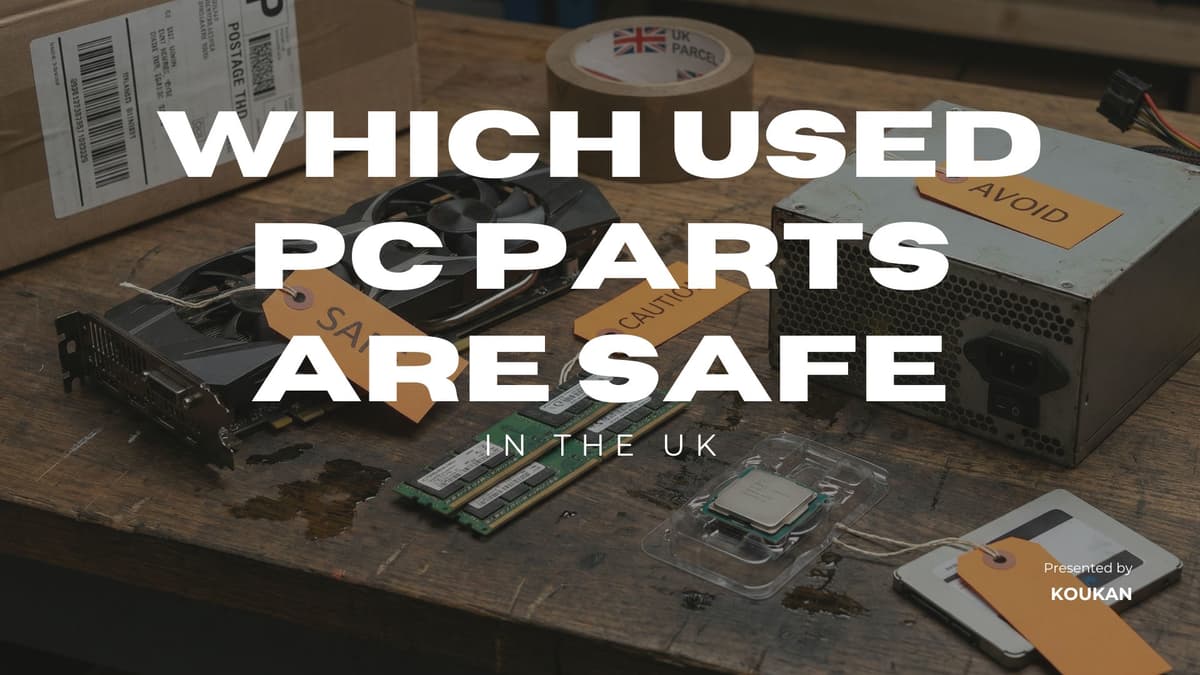
Advertisement
Buying used can be the smartest way to stretch a build budget—if you pick the right components. Some parts are basically "digital" (they either work or they don't). Others wear out gradually and can fail in ways that are expensive—or annoying—to diagnose.
This is a UK-focused quick-reference guide to what’s safe to buy used, what needs caution, and what you should generally avoid unless you can verify condition, remaining warranty, and correct accessories.
If you want the longer end-to-end process (where to buy, how to pay, scam avoidance), start here: Buy used PC parts in the UK: the complete buyer’s guide. For specialist deep dives, use our GPU guide ( buy used GPU UK) and CPU guide ( buy used CPUs online UK).
Safe vs caution vs avoid: the UK used-parts table
Use this table to triage listings fast. "Avoid unless…" doesn't mean "never"—it means you need stronger proof, clearer history, and safer payment terms.
| Component | Tier | UK notes + what to verify |
|---|---|---|
| CPU | Safe | Ask for clear socket-side photos, exact model, and a quick boot/BIOS proof. |
| RAM | Safe | Confirm DDR generation + speed; request a screenshot of capacity detected. |
| PC case | Safe | Collection is easiest in the UK; check missing screws, standoffs, and front-panel cables. |
| Air CPU cooler | Caution | Ensure mounting hardware matches your socket; inspect fan noise and fin damage. |
| GPU | Caution | Ask for benchmark proof (temps + clocks). Prefer tracked UK shipping and protected payments. |
| Motherboard | Caution | Check for bent pins (Intel socket), corrosion, and BIOS support; ask what's included (I/O shield, Wi‑Fi antennas). |
| SSD (NVMe/SATA) | Caution | Ask for drive health/SMART data and total writes; plan to secure-erase before use. |
| PSU | Avoid | Avoid unless you have proof of purchase, correct modular cables, and known-good history; a bad PSU can kill other parts. |
| AIO liquid cooler | Avoid | Avoid unless it's recent, quiet (no pump rattle), and includes all brackets; leaks and pump wear are hard to predict. |
| HDD | Avoid | Avoid unless you can verify low hours and excellent SMART health; UK shipping shock can finish an already tired drive. |
Generally safe to buy used
SafeThese parts tend to have predictable failure modes and are easy to validate quickly. You still want clear photos and a straightforward story—but the risk-to-reward ratio is usually good.
CPUs (processors)
CPUs are one of the safest used purchases because they have no moving parts. The main risks are misidentification (wrong model) and physical damage (pins/pads).
- Ask for a photo of the CPU markings and the contact side.
- Confirm socket + chipset compatibility (and BIOS version if relevant).
- For a deeper checklist (UK shipping + proof to request): buy used CPUs online UK.
RAM (memory)
RAM is usually "works or doesn't." Issues show up fast in a memory test, and the modules rarely degrade from normal use.
- Verify DDR generation (DDR4 vs DDR5) and rated speed.
- Prefer matched kits when possible (2×16GB etc.).
Cases (chassis)
A used case is mostly a logistics problem rather than a reliability one. In the UK, local collection is often best to avoid damage and oversized shipping costs.
- Check front I/O (USB/audio) and the presence of standoffs and screws.
- Look for bent panels and stripped threads.
Buy with caution (verify harder)
CautionThese components can be great value used, but they're more sensitive to heat, poor maintenance, missing accessories, or rough shipping. The goal is to turn "unknown" into "verified" before you pay.
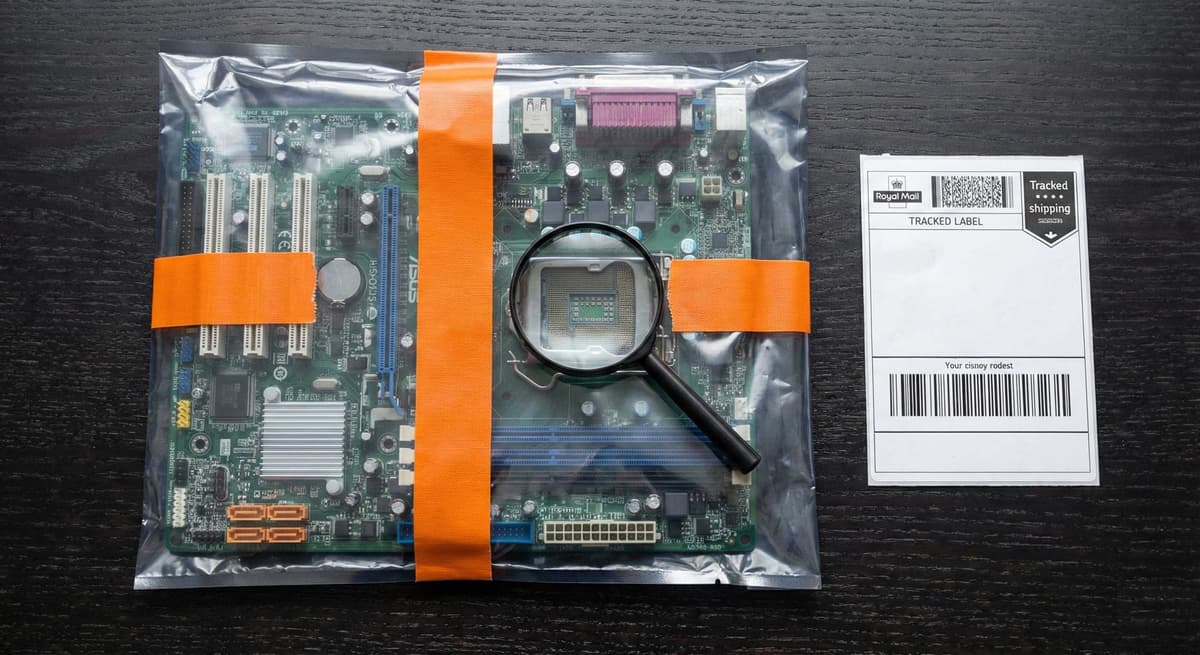
"Caution" parts demand clearer photos and stronger proof.
GPUs (graphics cards)
Used GPUs are a high-value category—and that attracts both honest bargains and dishonest listings. A GPU can look fine in photos and still have issues under load.
- Ask for a benchmark screenshot with temps and clocks visible.
- Ask whether it ran in a high-dust, high-heat, or always-on environment.
- Use the dedicated guide: buy used GPU UK.
Motherboards
Motherboards are often fine used, but "intermittent" faults are real and painful. Missing accessories (I/O shield, Wi‑Fi antennas, M.2 screws) are also common.
- Request close-ups of the socket area, RAM slots, and PCIe slot.
- Confirm the board boots and detects RAM/CPU in BIOS.
- Check for corrosion around rear I/O and VRM heatsinks.
SSDs (NVMe / SATA)
SSDs wear by write cycles. They can still be a good buy for games or secondary storage, but you should treat them like a "consumable with a meter."
- Ask for a screenshot of SMART health and total writes.
- Plan to secure-erase and avoid buying drives with data you can't wipe safely.
Air coolers & fans
Air coolers are usually fine, but the risk is missing mounting hardware or worn fans. In the UK used market, sellers often forget brackets in drawers.
- Confirm the mounting kit is complete for your socket.
- Ask if the fan has bearing noise or wobble.
Avoid unless you can verify these conditions
AvoidThese parts can fail in ways that are hard to test quickly, or they can take other components with them. If you still want to buy used, you need stronger proof and safer terms.
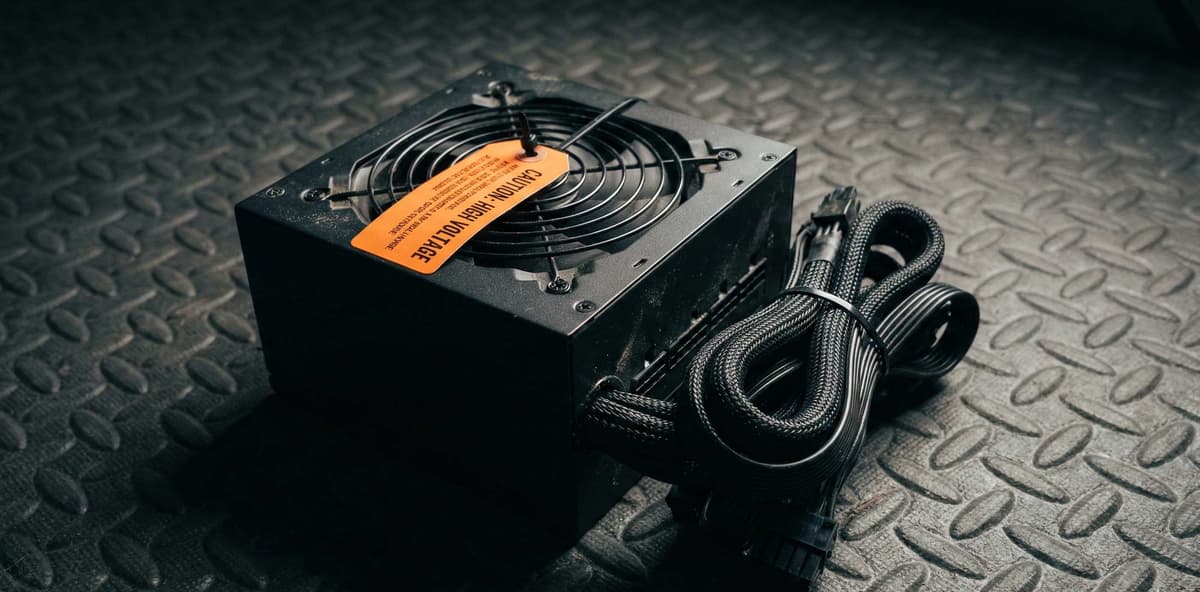
If one part can take others with it, demand stronger terms—or skip.
Power supplies (PSUs)
A PSU is the one part where "saving money" can become "replacing everything." If a PSU is unstable, it can cause crashes—or damage other parts.
- Only consider reputable units with a clear history and proof of purchase.
- Modular PSUs: ensure all original cables are included (mixing cables can be dangerous).
- Prefer sellers who can show it powering a system under load.
AIO liquid coolers
AIOs can develop pump noise, reduced flow, or leakage risk with age. It's difficult to "test once and trust."
- Avoid older units unless they're very recent and demonstrably quiet.
- Confirm all brackets and correct mounting hardware are included.
Hard drives (HDDs)
HDDs are mechanical and sensitive to impact. UK courier handling plus a poorly packed drive is a common failure recipe.
- Only buy if SMART health is excellent and hours are low.
- Use for non-critical storage only, with backups.
UK-specific buying notes (payment, postage, proof)
Payment: protect yourself first
- Prefer protected payment methods for shipped items; be cautious with bank transfers to strangers.
- If buying from a UK business seller (refurb/retail), your consumer rights are typically stronger than private sales.
Postage: insist on packaging discipline
If a seller won't use anti-static protection and cushioning, treat that as a signal. A "safe part" can become a dead part if it's tossed in a box.
- Ask for anti-static bag + padding + a snug outer box.
- For GPUs/motherboards, request photos of packing before dispatch.
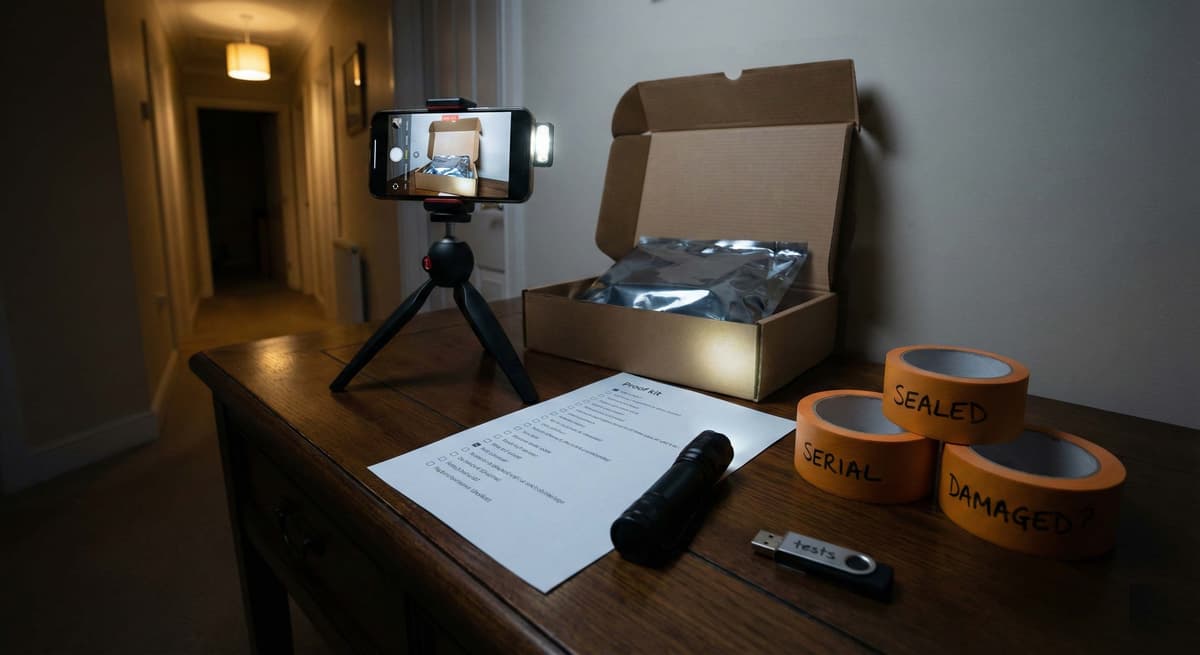
Packaging discipline is a trust signal in itself.
What to do on delivery (the day-one checklist)
Photograph the packaging and the part before you install it.
Inspect connectors, pins/contacts, and PCB edges for damage or corrosion.
Boot to BIOS first (CPU/RAM/motherboard) and confirm detection.
Stress test the GPU under load and monitor temperatures and stability.
For storage, secure-erase and run a quick health check before trusting it.
Where to find verified listings
If you'd rather browse listings with clearer categorisation and a marketplace flow built for components, take a look at Koukan listings. Use the table above as your filter: buy "Safe" with confidence, and only step into "Caution" when the proof is there.
FAQ: used PC parts (UK)
Which PC parts are safest to buy used in the UK?
CPUs, RAM, and cases are generally the safest used purchases because they're easy to validate quickly and have predictable failure modes.
Is it safe to buy a used GPU?
It can be—if you get proof (benchmarks, temps, clear photos) and test it immediately on arrival. Use our UK checklist here: buy used GPU UK.
Should I buy a used PSU?
Usually no. Only consider it if you can verify the exact model, history, and included cables, and you have confidence in the seller and terms.
Is used storage (SSD/HDD) safe?
SSDs can be okay if health and total writes look good. HDDs are riskier and should be avoided unless you can verify low hours and excellent SMART health.
What's the best all-round UK guide for buying used parts?
Start with Buy used PC parts in the UK, then branch into component-specific guides when you're ready to purchase.
Advertisement