Koukan vs eBay vs Facebook Marketplace: Where Should You Buy Used PC Parts?
Advertisement
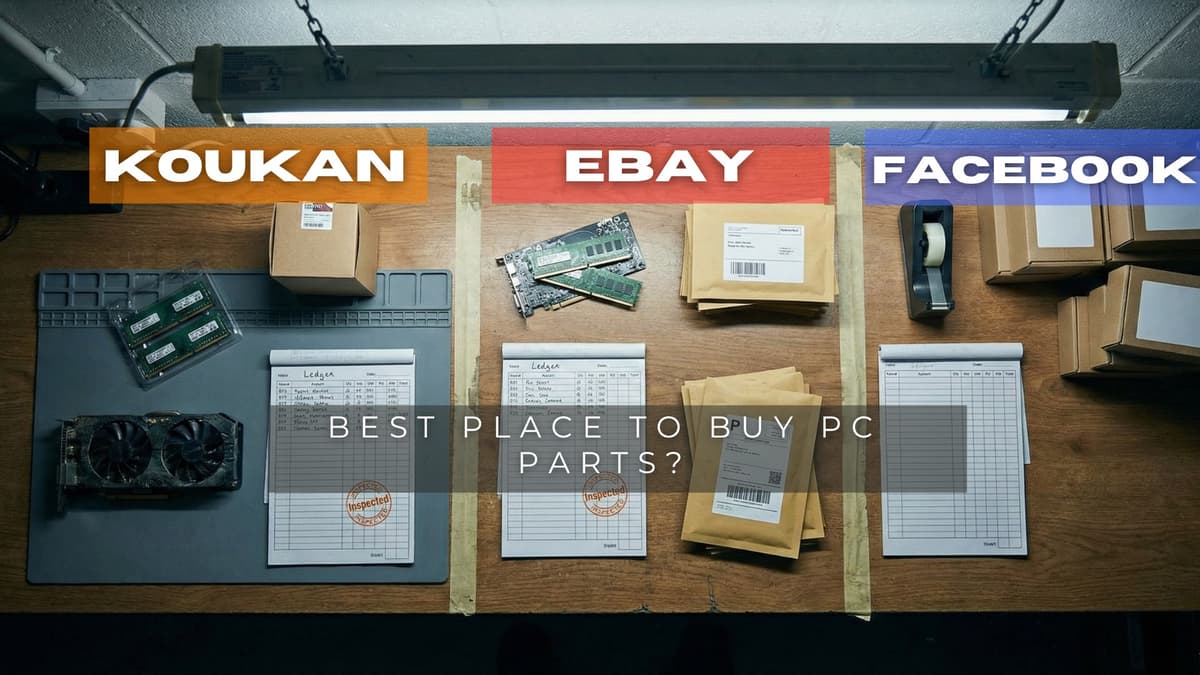
In the UK, buying used PC parts is less about finding a marketplace and more about matching the marketplace to your risk tolerance: shipped vs collection, protected checkout vs cash, and how much proof you need before you pay.
This guide compares Koukan, eBay, and Facebook Marketplace as places to buy second-hand GPUs, CPUs, RAM, and other components. You’ll get an honest comparison table, UK-specific trade-offs, and a simple decision flow.
If you want the full end-to-end process (what to check, what’s safe to buy used, and arrival tests), start with the pillar guide: buy used PC parts in the UK. For scam patterns and payment red flags, keep the safety checklist close: how to avoid scams buying used PC parts online.
The quick UK answer (if you don’t want to overthink it)
Safest default
Koukan
Designed around PC parts, structured listings, and a marketplace experience that expects proof.
Largest selection
eBay
Huge inventory, strong search filters, and familiar purchase protections—at the cost of higher fees and mixed listing quality.
Cheapest local deals
Facebook Marketplace
Best for in-person collection when you can test quickly. Also the easiest place to get pressured into risky payments.
Rule of thumb (UK): If it’s being posted, prioritise protection and proof. If it’s collection, prioritise a safe meeting place and a fast test.
Honest comparison table (UK used PC parts)
| Category | Koukan | eBay | Facebook Marketplace |
|---|---|---|---|
| Fees | Typically lower platform friction for PC-part pricing; check current terms. | Seller fees can be meaningful, which often pushes prices up. | Usually no listing fees; costs show up as time, travel, and risk. |
| Buyer protections | Marketplace flow designed around parts and “not as described” realities. | Stronger dispute path for shipped items, but outcomes depend on evidence and process. | Inconsistent—especially for cash collection; you’re mostly on your own. |
| Verification / trust signals | Built for verified profiles and clearer listing hygiene. | Feedback helps, but “good seller” ≠ “good PC part”. | Very mixed; lots of new accounts and low-effort listings. |
| Listing quality | More structured; tends to surface the details buyers actually need. | Highly variable: excellent listings and absolute chaos, sometimes in the same search. | Often minimal. Expect vague descriptions and blurry photos unless you ask. |
| Best for | UK buyers who want a PC-parts-first marketplace. | Rare parts, broad selection, and shipped items when you want a paper trail. | Local bargains when you can collect safely and test quickly. |
Policies and fees change. Always confirm current terms before relying on them.
Fees (and how they quietly change UK used prices)
When a marketplace charges higher seller fees, sellers often compensate in one of two ways: higher asking prices or less flexibility on offers. In practice, fees become “invisible markup” and they can affect the whole category (especially popular GPUs).
Facebook Marketplace can look cheaper because it’s usually fee-free—however, the real cost is the legwork: messaging, arranging collection, and handling higher scam pressure. If you value speed and certainty, a slightly higher price on a more structured marketplace can be worth it.
Protections only work if you capture proof
Buyer protections are not magic. They’re a framework that works when you keep a clean record: listing screenshots, in-platform messages, clear evidence of condition, and quick arrival tests.
For posted items (Royal Mail / courier)
- Record the unboxing (one continuous take is best).
- Photograph serial-label areas and ports/connectors.
- Run a quick load test the same day you receive it.
For collection deals
- Meet somewhere public (and ideally covered/CCTV).
- Inspect for obvious damage before money changes hands.
- Have a plan for a fast test at home (or a demo on-site if offered).
For the UK-specific scam patterns to watch for (including the off-platform payment pivot), read: how to avoid scams when buying used PC parts online.
UK fraud context: Online shopping and auction fraud is consistently the most reported fraud category in the UK. Action Fraud (National Fraud & Cyber Crime Reporting Centre) processes hundreds of thousands of reports each year; private-sale platforms and social marketplaces account for a disproportionate share. Using a structured marketplace with escrow substantially shrinks this exposure.
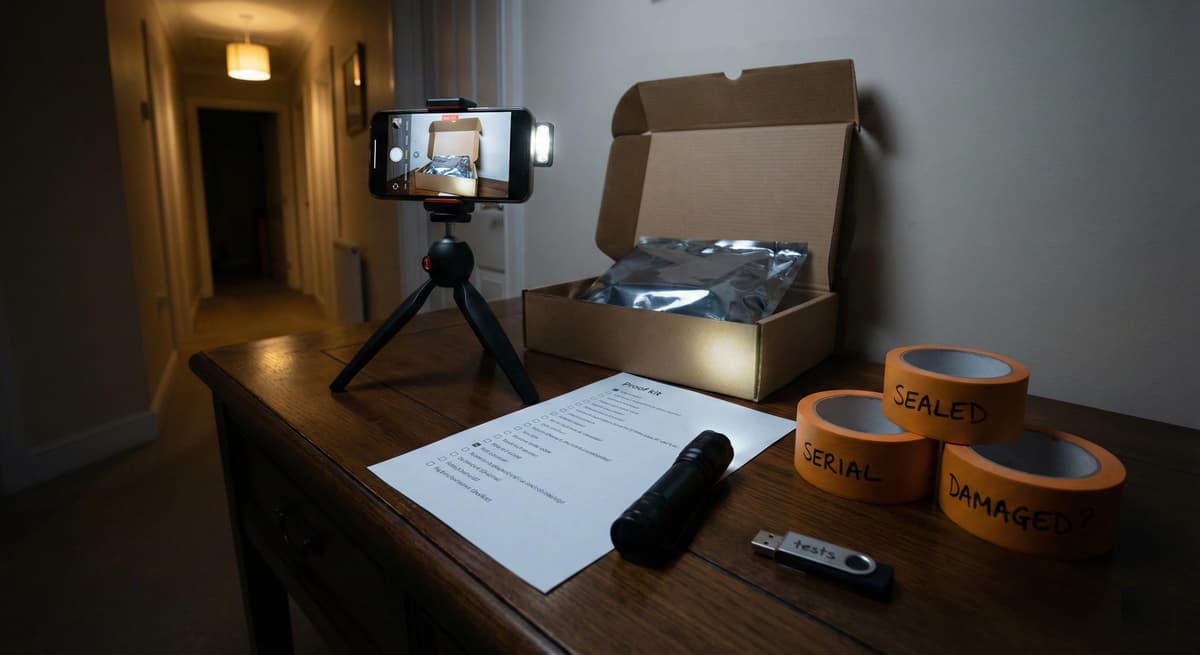
Protection works best when you keep evidence tidy.
Listing quality: the signal you should trust most
In used PC parts, the listing is the first test. A good listing usually means a seller who will answer questions and provide proof. A vague listing often means you’ll need to drag details out—or you’ll never get them.
Green flags
- Clear photos of the actual item (front/back/ports).
- Exact model, condition notes, and what's included (box, cables, brackets).
- Simple proof: benchmark screenshot, CPU-Z/GPU-Z, or a short video.
Red flags
- Stock images or one blurry photo.
- “Untested” or “no returns” paired with pressure to pay fast.
- Refuses specific proof but offers a discount if you pay by bank transfer.
A calm way to shop: start from listings that read like a checklist
If you’d rather spend your time comparing GPUs and prices instead of negotiating for basic photos and proof, browse listings that are designed to surface the details buyers need.
Not sure what to check when the part arrives? Use the arrival-test flow in the UK used-parts guide.
FAQ
Which is safest in the UK: Koukan, eBay, or Facebook Marketplace?
If you want the safest default, prioritise structured listings and a clear dispute path. If you want the broadest selection, eBay is hard to beat. If you want local bargains, Facebook Marketplace can work—but only if you keep the transaction simple and safe.
Is Facebook Marketplace good for buying used GPUs in the UK?
It can be great value for collection deals. Treat it like a controlled handover: meet in public, inspect the card, and test as soon as you get home. If the seller tries to move you to risky payment methods, step away.
Do eBay fees affect used PC part prices?
Often yes. Fees can show up as higher asking prices or less willingness to negotiate. That doesn't erase eBay's strengths—especially for niche parts and posted items—it just changes how you compare deals.
What's the simplest way to avoid scams across all three?
Demand specific proof, avoid off-platform payment pivots, and test quickly. This checklist helps: how to avoid scams buying used PC parts.
Advertisement